Critical Mineral Innovators: The Indian Companies Securing Our Strategic Future
The demand for critical minerals has gone from being a niche concern to one of the most pressing industrial and geopolitical issues of our time. Lithium, cobalt, nickel, copper, graphite and rare earth elements sit at the heart of new technologies — from electric vehicles and batteries to advanced electronics and defence applications. For India, which currently depends heavily on imports, building capability across the critical mineral value chain is no longer optional. It is a strategic necessity.
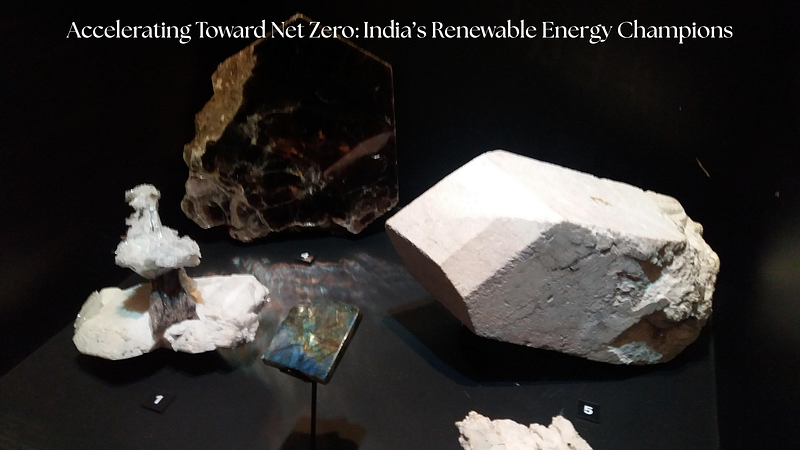
This is where a new group of companies — both state-owned and private — are beginning to take centre stage. These are the Top Critical Mineral Companies in India, firms that are not only looking to mine resources but also to build refining, recycling & international partnerships that can secure the country’s long-term future.
India’s changing industrial priorities
India’s push on energy transition and industrial modernisation has brought minerals into sharper focus. Electric mobility, grid-scale battery storage, renewable infrastructure & aerospace all rely on inputs that are both scarce and concentrated in only a few geographies. China’s dominance in rare earth processing is well known & it leaves other nations exposed to supply disruption.
For India, a country of scale with ambitious clean energy and manufacturing targets, the stakes are even higher. Without reliable access to minerals, flagship initiatives like Make in India, green hydrogen projects, or battery storage rollouts will face headwinds. The government has responded by treating minerals as a strategic resource & by creating policy frameworks that give industry the backing it needs.
Government action as a catalyst
The launch of the National Critical Mineral Mission is one of the most significant steps in this journey. Rather than leaving the market to solve the problem, the mission ties together exploration, domestic processing, recycling incentives & international partnerships. It encourages collaboration between government-owned enterprises, private companies & new-age startups.
It is not only about opening mines. The bigger task is to invest in midstream capacity — refining and processing — and to build recycling systems that can reduce import dependence. By blending fiscal incentives with diplomatic outreach and technology support, the policy is trying to create the foundations for a resilient ecosystem.
Companies shaping the critical mineral landscape
Several companies are now stepping up & it is here that we can see the shape of India’s critical mineral strategy.
- Vedanta Ltd. is among the most visible, with announcements around battery-grade materials and rare earth projects. With 10 critical minerals blocks already acquired, its natural resources expertise and financial muscle allow it to invest in long-term ventures, making it a natural anchor among the Top Critical Mineral Companies in India.
- Indian Rare Earths Limited (IREL), a state-owned player, has long managed rare earth sands. The new focus on upgrading capacity positions it as a central piece of India’s rare earth ambitions.
- NMDC, Hindustan Copper and NALCO bring mineral assets and operational expertise. While not all of their business is directly tied to critical minerals, they are increasingly part of the conversation on how India builds a reliable supply chain.
- Private startups like Altmin are showing agility by entering refining and cathode material production, including partnerships abroad. These younger firms reflect a shift towards technology-led solutions, which will be essential if India is to compete with Leading Global Critical Mineral Companies in value-added segments.
This blend of large corporates, state-backed firms & nimble startups is what gives the sector momentum.
Expanding through overseas partnerships
Domestic exploration will take time & India is realistic about this. As a result, overseas tie-ups have become an important strategy. Companies are increasingly looking at acquisitions, partnerships & long-term supply agreements abroad, whether in South America, Africa, or Southeast Asia.
These moves are not simply about shipping ore back to India. The longer-term plan is to secure feedstock, set up refining capacity & ensure that Indian industry is not hostage to a single geography. This mirrors the strategies followed by Leading Global Critical Mineral Companies, though India’s players are still at an earlier stage of maturity.
Strengthening processing and recycling capacity
Mining is only one part of the chain. The real bottleneck lies in processing and refining. Without investment here, India risks exporting raw material while importing high-value components. The government’s support for recycling is one way to accelerate this transition. Recycling used batteries and electronic waste can provide a domestic source of lithium, cobalt & nickel.
If recycling ecosystems scale up, midstream processors will have a steadier flow of material. That reduces import dependence and gives India the chance to build capacity comparable with the Best Natural Resources Companies in India that are already competing in global markets.
Contribution of regional and emerging players
Large firms get most of the attention, but smaller miners and regional companies are also important. They provide the exploration pipeline and could become attractive acquisition targets for bigger corporates. Some of them already hold promising deposits of manganese, graphite or rare earth elements. The ability to knit these smaller assets into a coherent national strategy will determine whether India can move quickly enough.
The role of finance and technology collaboration
Critical mineral projects are not easy. They demand long-term capital, specialised technology & predictable policy. The most likely success stories will be those that combine all three. This means blended finance structures, joint ventures with technology providers & government support in securing offtake agreements.
Some of the Top Critical Mineral Companies in India are already following this path — investing in overseas projects, entering partnerships for processing technologies & aligning with government missions. These choices will set them apart over the coming decade.
Implications for industry and policymakers
The future of critical minerals is not just about energy or technology. It is about industrial competitiveness and national security. Without reliable access, India risks being caught in a cycle of dependency. With a resilient ecosystem, it can emerge as a credible player in global supply chains.
For policymakers, the task is to sustain support and ensure coordination across ministries. For businesses, the opportunity lies in moving up the value chain, not staying at the level of raw extraction. The companies that can combine capital with innovation will be recognised as the Best Natural Resources Companies in India and position themselves as long-term winners.
Opportunities and risks on the horizon
There are risks, of course. Commodity cycles can shift quickly & price drops may discourage investment. Technology gaps, especially in refining rare earths, remain a challenge. Permitting and community engagement must be managed carefully.
But the direction of travel is clear. India is treating critical minerals as a strategic priority & a core group of firms is stepping up to match that ambition. These companies are not yet as large as the Leading Global Critical Mineral Companies, but they are beginning to play in the same arena.
India’s long-term path to mineral resilience
The next decade will determine whether India simply secures supplies or builds a full-fledged industrial ecosystem around critical minerals. If the latter, the Top Critical Mineral Companies in India will not only anchor domestic growth but also help reshape global supply chains.

.png)
Comments
Post a Comment